
CEE Digital Summit 2026: Central and Eastern Europe strengthens digital cooperation
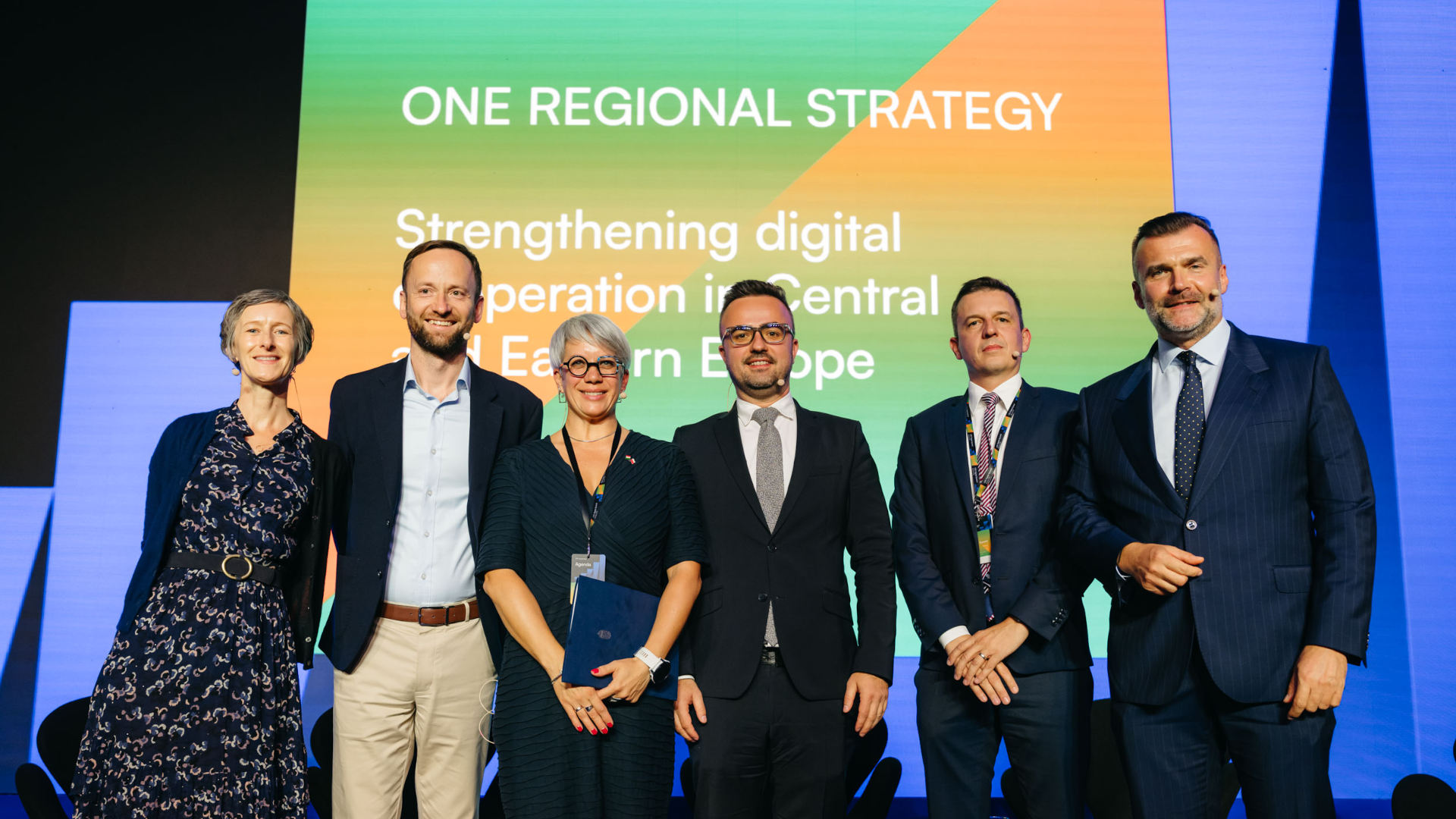
Government representatives from across Central and Eastern Europe, EU institutions and the digital industry gathered in Warsaw to discuss the key challenges shaping the region’s digital future. On 29 September, Warsaw hosted the CEE Digital Summit 2026, bringing together the regional community built around the CEE Digital Coalition.
This year’s Summit was held under the theme of “One Region. One Competitive Europe. One Secure Future.” Discussions focused on some of the most important issues shaping the digital future of Central and Eastern Europe and the EU as a whole, including artificial intelligence, investment in digital infrastructure, cybersecurity, digital skills and Europe’s technological resilience.
Participants also discussed the regulatory environment needed for European companies to innovate, scale and compete more effectively in global markets. CEE Digital Summit provided a platform to explore how countries across Central and Eastern Europe can work more closely together and ensure that the region’s shared priorities are better reflected in the European debate on technology and competitiveness.
Building a stronger voice for Central and Eastern Europe
Since 2020, the CEE Digital Coalition has been bringing together organisations representing the digital and technology sectors from 14 countries across Central and Eastern Europe, including Ukraine and Moldova. The Coalition aims to strengthen regional cooperation, facilitate the exchange of experience and build a stronger CEE voice in the European digital policy debate. The CEE Digital Summit has become one of the Coalition’s key platforms for bringing together national administrations, businesses, EU institutions, industry organisations and experts.
This year’s edition in Warsaw welcomed digital industry organisations from across the region, including representatives from Czechia, Hungary, Slovakia, Slovenia, Estonia and Romania.
Particularly important was the participation of government representatives responsible for digitalisation, artificial intelligence and technological development across CEE. Among those joining the Summit were Lukáš Kačena, Government Commissioner for AI at the Ministry of Industry and Trade of the Czech Republic; Zoltán Tanács, Minister of Science and Technology of Hungary; Andrea Polereczki, State Secretary at the Hungarian Ministry of Science and Technology; Iulian Cosmin Mârgeloiu, State Secretary at Romania’s Ministry of Economy, Digitalisation, Entrepreneurship and Tourism; Radoslav Štefánek, Slovakia’s Government Plenipotentiary for AI; and Rafał Rosiński, Undersecretary of State at Poland’s Ministry of Digital Affairs.
AI: turning potential into real-world adoption
Artificial intelligence was one of the central themes of this year’s CEE Digital Summit. Participants discussed how the region can translate its technological potential into tangible economic benefits.
Central and Eastern Europe has strong engineering talent, a well-developed IT sector and rapidly growing technology ecosystems. At the same time, one of the region’s biggest challenges remains the pace at which new technologies are adopted by businesses, particularly small and medium-sized enterprises.
Participants stressed that simply making new AI tools available will not be enough to increase productivity and strengthen the competitiveness of the European economy. Businesses need the right conditions to deploy these technologies effectively: access to financing, data, infrastructure and computing capacity, as well as skilled employees and a predictable regulatory environment. Experts gathered in Warsaw argued that fully capturing the potential of AI also requires companies to move beyond experimentation and integrate AI into business processes, operating models and decision-making.
For CEE countries, accelerating AI adoption among SMEs and developing mechanisms that help local companies move from experimentation to large-scale deployment will therefore be particularly important.
Openness and cooperation with trusted partners
Another important part of the discussion focused on how Europe can strengthen its own technological capabilities while remaining open to cooperation with trusted international partners.
Participants argued that strengthening the resilience and security of Europe’s digital economy should not mean restricting access to leading technologies. Instead, Europe should focus on building a more diversified, competitive and resilient technological ecosystem.
In the context of the proposed Cloud and AI Development Act (CADA), speakers stressed that while Europe should create an innovation-friendly environment in which European companies and technologies can grow and compete, Central and Eastern Europe – and the EU more broadly – should remain committed to the principles of openness and the free market.
International partnerships, technological diversification and access to a broad range of solutions can remain important elements of Europe’s efforts to strengthen its technological capabilities and resilience.
Cybersecurity requires stronger regional cooperation
Cybersecurity was another major focus of the Summit. Central and Eastern European countries face a particularly challenging security environment given the scale and nature of cyber threats affecting the region in recent years.
The discussion therefore focused not only on identifying emerging threats, but above all on what CEE countries can do together to strengthen the resilience of the entire region.
Participants highlighted that cyber threats are inherently cross-border, while many response mechanisms still operate primarily at national level. Stronger practical cooperation is therefore needed – from information and experience sharing to incident response, joint training, capability development and faster deployment of new cybersecurity technologies.
One of the key conclusions was the need to develop a stronger European industrial policy for cybersecurity. Europe needs not only regulations defining the obligations of businesses and institutions, but also conditions that encourage investment, innovation and the development of new technologies and companies in the cybersecurity sector.
Discussions also addressed online safety, including the increasingly important issue of protecting children online. Participants pointed to the need for a coherent approach to issues such as platform responsibility and age verification – one that provides effective protection for minors while remaining proportionate and workable in practice.
From shared challenges to joint action
A common theme running through this year’s CEE Digital Summit was the need to translate regional dialogue into concrete forms of cooperation.
During discussions involving government representatives from across the region, participants noted that CEE countries differ in the size of their economies, levels of digitalisation and the structure of their technology sectors, but nevertheless face many similar challenges.
Increasing AI adoption, attracting technology investment, ensuring access to infrastructure and capital, developing digital skills and strengthening cybersecurity are all areas in which the exchange of experience and joint initiatives can generate tangible benefits.
Regional cooperation should also extend to European digital policy. Stronger coordination between CEE governments and technology industry organisations can help the region participate more effectively in discussions in Brussels and bring the CEE perspective into the European policymaking process at an earlier stage.
The ambition of the CEE Digital Coalition is for Central and Eastern Europe not merely to be a recipient of technologies, investments and regulations, but to actively contribute to shaping the next stage of Europe’s digital transformation.
The CEE Digital Summit Warsaw 2026 was organised with the support of key partners. Business & Science Poland served as the Summit’s Content Partner, while Visa and AMD supported the event as Partners. The conference was held under the honorary patronage of the Polish Ministry of Digital Affairs and the Poland G20 Agenda.