
#CEEAIChallenger 2026 in Bratislava: Slovakia puts industry at the centre of its emerging National AI Strategy
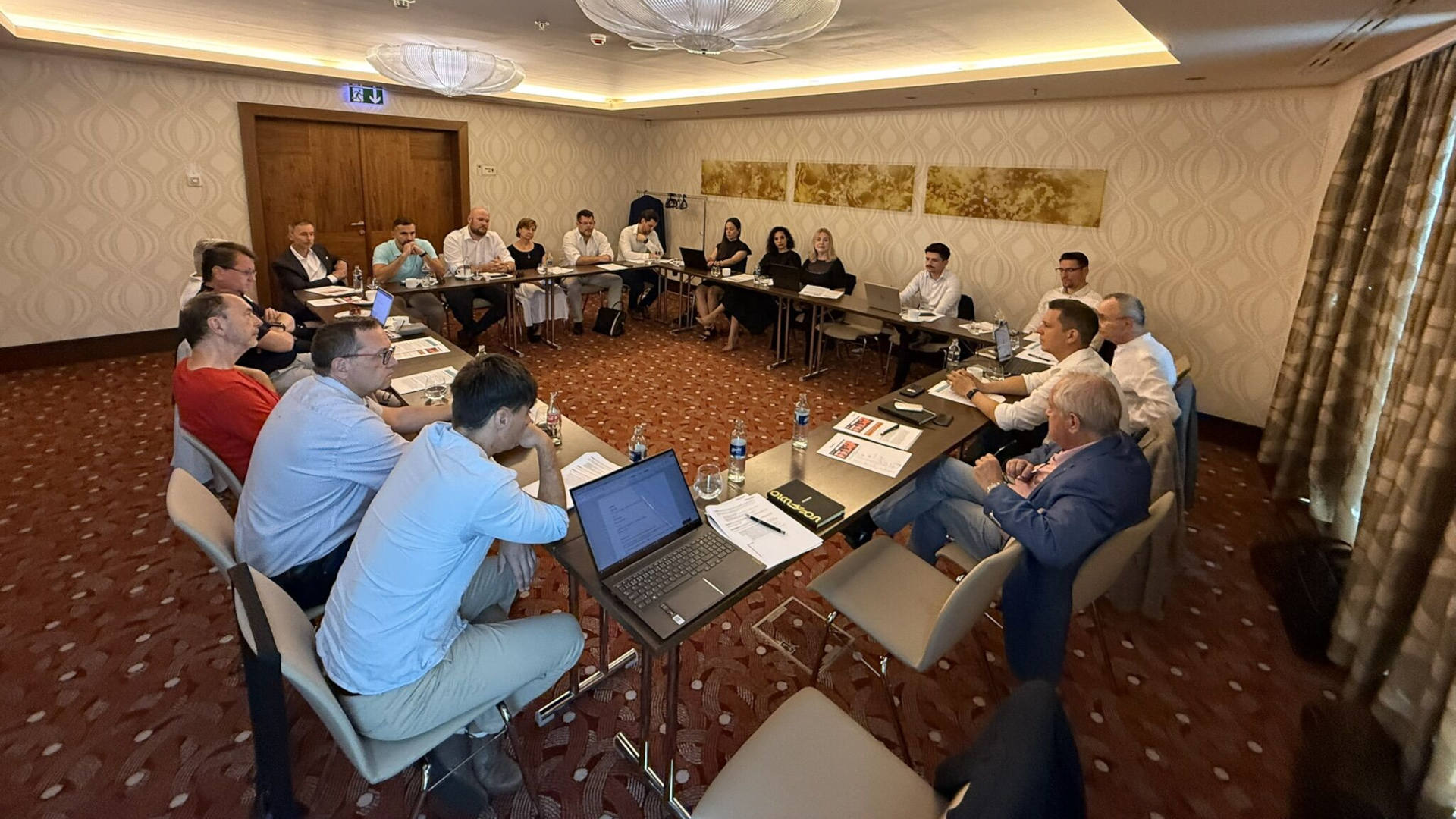
As Central and Eastern Europe continues to define its role in Europe's AI ecosystem, national strategies will play a crucial role in determining how artificial intelligence translates into economic growth and industrial competitiveness. These issues were at the heart of the recent #CEEAIChallenger 2026 roundtable, held in Bratislava in cooperation with AIslovakIA, bringing together policymakers, industry leaders, researchers and technology experts to discuss the region's strategic approach to AI deployment.
The meeting took place at a particularly significant moment, as Slovakia presented the first draft of its National AI Strategy, a document that aims to establish the country's long-term priorities for AI development and adoption. Developed through a participatory process involving representatives of government, academia and business, the strategy is expected to receive final government approval later this year.
From AI ambition to industrial implementation
Opening the discussion, Government Plenipotentiary for Artificial Intelligence Radoslav Štefánek and President of the IT Association of Slovakia Emil Fitoš presented the strategic vision underpinning the document. Rather than focusing primarily on generative AI, the strategy places particular emphasis on practical industrial applications of AI, identifying analytical AI, machine vision, data processing and specialised neural networks as the technologies capable of delivering the fastest economic impact.
Participants broadly agreed that for Central and Eastern European economies, AI deployment should begin where it can create measurable value - within manufacturing, industrial production and other sectors that form the backbone of regional competitiveness.
Building trusted European AI ecosystems
The discussion also addressed Europe's broader technological position in an increasingly competitive global AI landscape. Participants highlighted the importance of strengthening European digital sovereignty through the development and deployment of AI solutions that comply with European values and legislation.
Special attention was devoted to the growing role of European AI models, open-source technologies and trusted data environments that allow organisations to innovate while protecting sensitive industrial information and business know-how. The conversation also explored how organisations can leverage open-source models to develop AI solutions tailored to the specific needs of Central and Eastern European industries.
Regulatory sandboxes as a catalyst for innovation
Another important topic concerned the role of regulatory and innovation sandboxes in supporting responsible AI deployment. Participants agreed that sandboxes should become practical environments where organisations can test AI applications, assess risks, validate compliance with European regulations - including the AI Act - and identify the most appropriate technological approaches before deploying solutions at scale.
Such mechanisms were recognised as an important tool for reducing uncertainty around AI implementation while encouraging innovation across both the public and private sectors.
Opportunities - and challenges - for AI adoption
The discussion highlighted Slovakia's favourable conditions for AI development, including its reliable electricity infrastructure, which provides a strong foundation for the growing computational demands of AI technologies.
At the same time, participants pointed to several challenges that continue to slow AI adoption across the region. These include relatively low levels of digitalisation among SMEs, shortages of AI and data specialists, insufficient investment in digital skills, and ongoing concerns regarding regulatory complexity and data security.
The consensus emerging from the discussion was clear: effective AI strategies must balance innovation with trust while remaining closely aligned with the economic strengths of individual countries.
Strengthening the CEE perspective on AI
The Bratislava roundtable marked another important step in the #CEEAIChallenger 2026 series, reinforcing the importance of regional cooperation in shaping AI policies that reflect the specific needs of Central and Eastern Europe.
As discussions continue across the region, one message has become increasingly clear: Europe's AI ambitions will depend not only on breakthrough technologies, but also on the ability to translate strategic vision into practical deployment that strengthens industry, supports innovation and enhances long-term competitiveness.